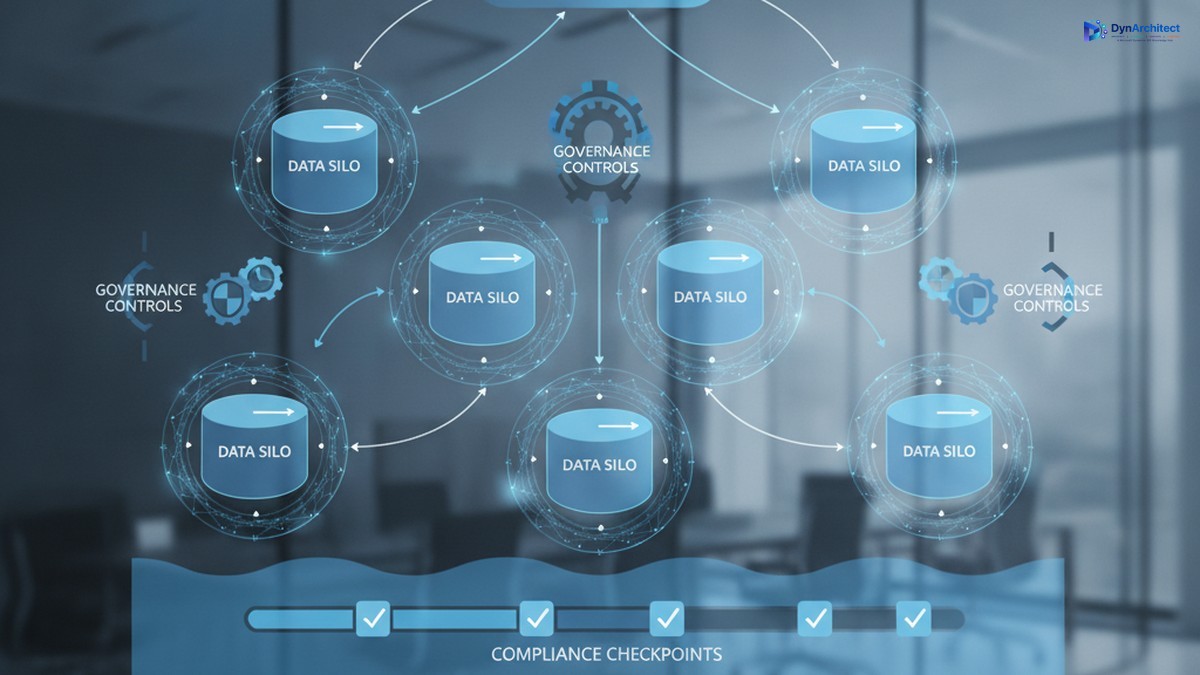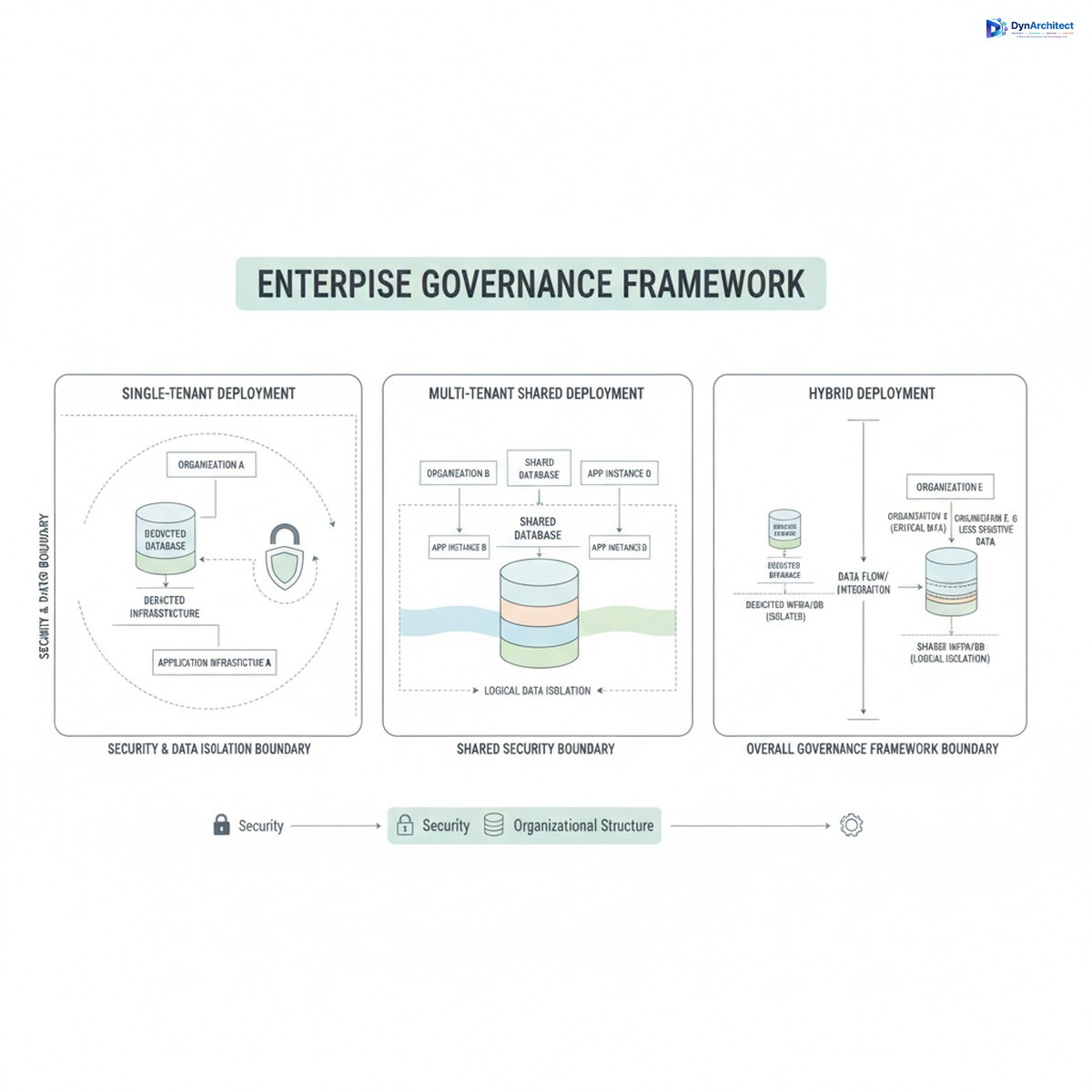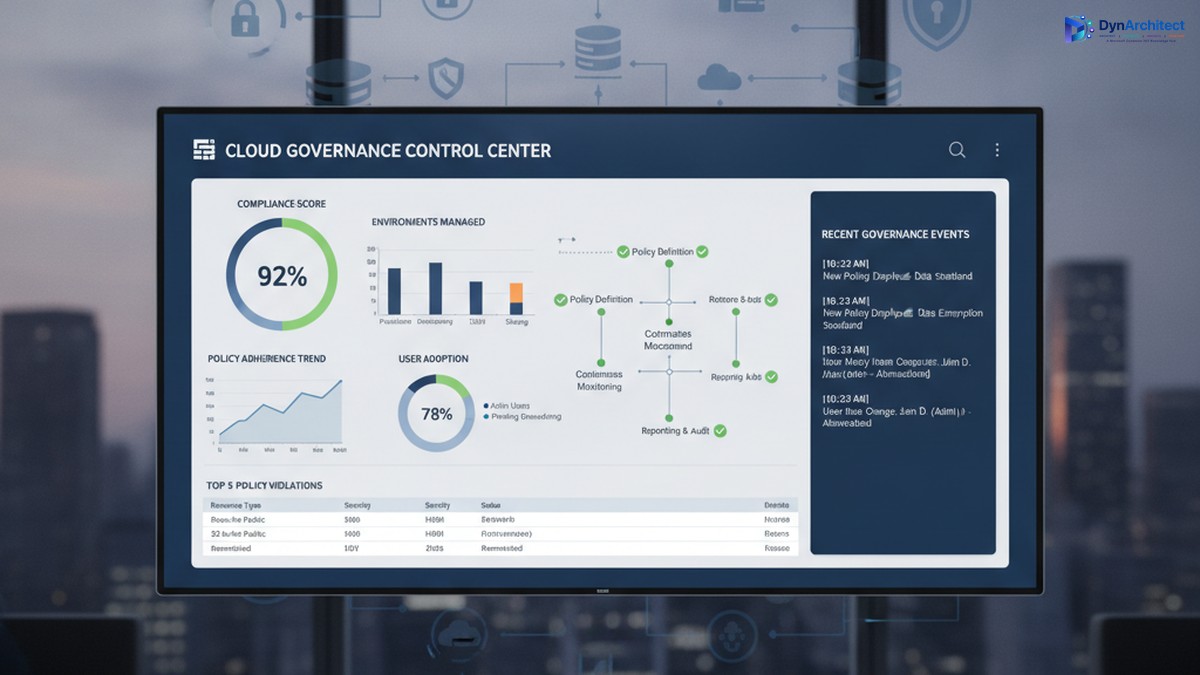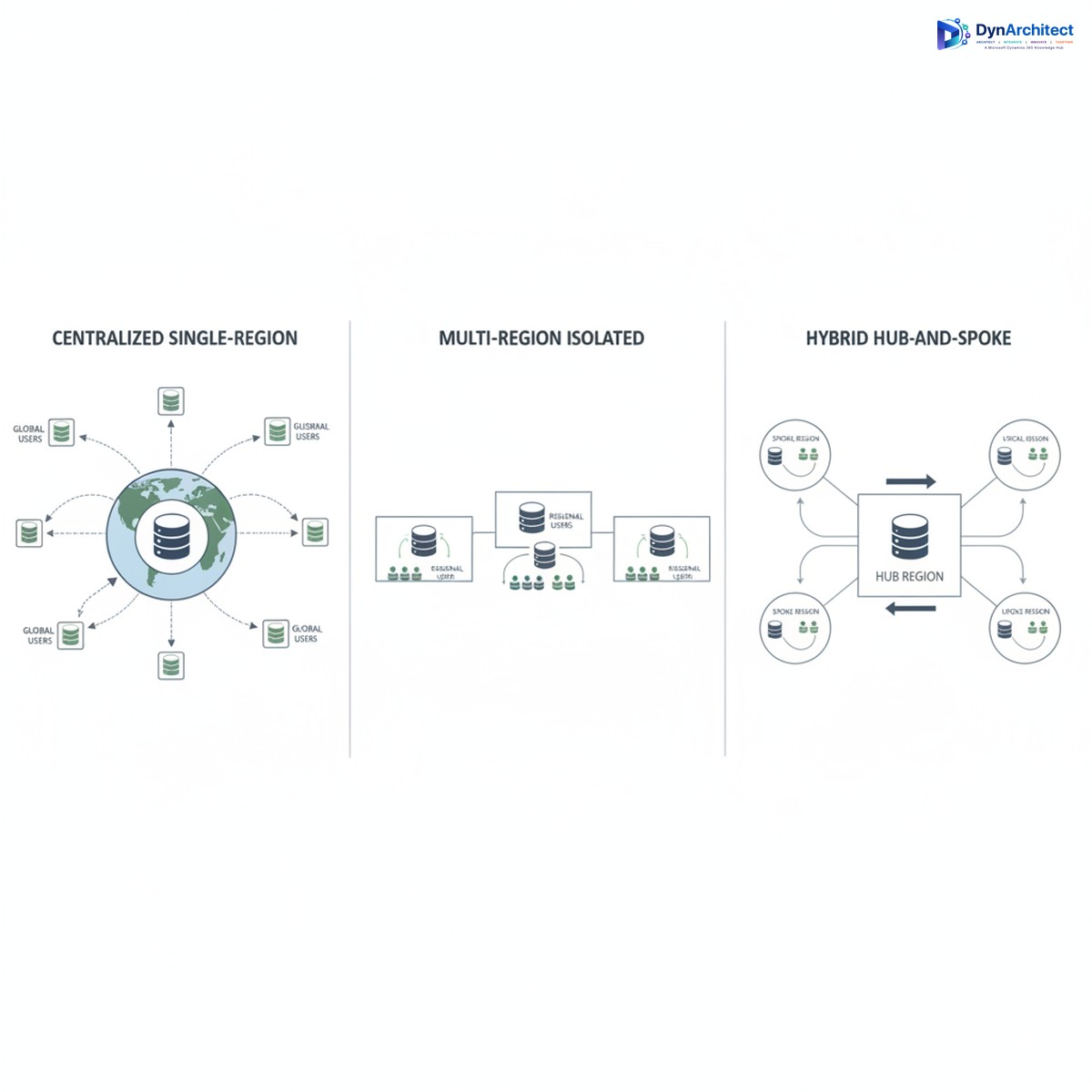
Organizations managing sensitive customer and operational data in Microsoft Dynamics 365 and Dataverse face an increasingly complex landscape of regulatory requirements, internal audit obligations, and stakeholder governance expectations. Compliance frameworks such as GDPR, HIPAA, SOX, and industry-specific standards place explicit demands on how data is accessed, modified, and retained. Yet many enterprise Dataverse deployments treat data governance as an afterthought, layered on top of an already-live system rather than architected from the start. This creates risk exposure and operational friction that audit teams and compliance officers spend months trying to remediate.
A deliberate data governance framework in Dataverse addresses this directly by establishing clear ownership, access control, and audit visibility before deployment rather than retrofitting governance months after go-live. The framework does three things well: it ensures that only authorized users can access or modify specific data sets, it creates a durable audit trail of who accessed what data and when, and it establishes accountability structures so that business leaders can quickly answer regulatory or audit inquiries about data handling practices.
Building this framework requires decisions across three dimensions: access architecture (who can see what data, and under what business conditions), audit and logging (what changes are tracked and who can access the audit trail), and data lifecycle management (how long data is retained and under what conditions it is purged). These are not purely technical decisions; they emerge from business governance policy and compliance requirements that should be clearly articulated by compliance, legal, and audit teams before implementation begins.
Access Control as the Foundation
Dataverse’s access control model starts with role-based security, where security roles define capabilities at a feature level (can a user create, read, update, or delete records of a given entity type) and share permissions (can a user see records owned by others). However, role-based control alone is coarse-grained: it does not distinguish between records within an entity type based on data sensitivity, business unit, or customer segment. Two users with the same security role can see all records in an entity, even if one should only see records for their own geographic region or customer vertical.
Dataverse adds two layers to refine access further: organization-owned versus user-owned record ownership, and team ownership structures that allow a set of records to be owned by a team rather than an individual. These features help, but they require discipline during implementation to be effective. A common mistake is to grant broad organization-level access to an entity because it feels simpler than setting up team-based ownership, then later realizing that users can see sensitive data they should not have access to.
A governance framework addresses this by establishing a clear access matrix during design: for each entity (or entity family such as customer records, financial transactions, or employee data), the framework defines which security roles can perform which operations, which records are owned by individuals versus teams, and whether sensitive fields within an entity require additional field-level access restrictions. Field-level security in Dataverse allows you to hide or restrict modification of specific fields to certain security roles, which is powerful for protecting sensitive columns like salary, medical information, or SSN without resorting to separate entities.
This mapping should be documented in a way that business stakeholders understand: a simple table showing entity type, record ownership model, security roles with access, and any field-level restrictions answers the question “who can see what” in business language rather than technical jargon. Once documented, this matrix becomes part of your governance baseline and a reference for onboarding new users or reviewing access during audit cycles.
Audit Trails and Change Tracking
Regulatory compliance often requires proof that sensitive data changes were made by authorized users and can be traced back to a business justification. Dataverse’s audit feature logs create, update, and delete operations on specified entities, recording the user who made the change, the timestamp, and the old and new field values. However, audit logs are only valuable if you know which entities to monitor and if you actively use the audit data to investigate access patterns or unusual changes.
A governance framework defines a “audit perimeter”: which entities are subject to audit logging, which fields within those entities are critical enough to track for compliance purposes, and how long audit logs are retained. For example, if you are handling customer payment information subject to PCI compliance, you would want to audit all access to payment card entities, even read-only access, and retain those logs for a defined period (often several years). In contrast, audit logging for a reference data entity such as product definitions might be less stringent.
The second component is audit access control: who is allowed to view audit logs, and can they be relied on as evidence of compliance? If system administrators can create, view, and delete audit logs at will, the audit trail loses credibility as a compliance artifact. A governance framework should separate the role that creates audit data (system operations, powered by Dataverse’s audit configuration) from the roles that access audit data for review (compliance, audit, and security teams). Ideally, audit logs are exported to a separate system (such as Azure Synapse, a data lake, or a SIEM) where they cannot be modified or deleted by user actions in Dataverse itself.
Audit Dataverse also provides change tracking, which is a lighter alternative to full audit logging: it records that a field changed but not the old value. Change tracking is useful for detecting unauthorized modifications to master data or configuration, even if you do not need the full audit trail for compliance purposes. Including change tracking in your governance framework for non-sensitive entities can help catch data quality issues or accidental overwrites without the overhead of full audit logging.
Data Lifecycle and Retention Policy
A complete data governance framework includes decisions about how long data is retained, what happens to data at end of life, and who is responsible for data purging. Many organizations default to infinite retention because deletion feels risky, but indefinite data retention creates compliance risk: GDPR’s right to be forgotten, for example, requires that personal data be deleted upon request unless there is a specific legal basis to retain it. Retaining data longer than necessary also increases the attack surface and creates unnecessary storage costs.
Establishing a retention policy within your governance framework requires collaboration between business (which teams use the data and for how long), legal and compliance (what regulations require), and IT operations (how to efficiently delete or archive data at scale). A retention policy might specify that customer contact records are retained for seven years after the last transaction, that employee data is retained for three years after termination, or that transactional logs are retained for five years. Each entity or data family should have a defined retention period and a corresponding deletion procedure.
Dataverse does not have automatic data purging built in, so a retention policy requires an operational process: either a scheduled flow that identifies records past their retention date and deletes them, or a manual review process where designated users approve deletion in batches. For sensitive data categories such as health information or financial records, requiring explicit approval before deletion adds an extra control layer. For high-volume, less-sensitive data such as transactional logs, automated purging based on the retention policy is more practical.
Governance in Practice: Implementation Guidance
Building a governance framework in practice means translating policy into configuration. Start with an access matrix workshop bringing together business owners, security leads, and compliance representatives to define who needs access to which data and under what business conditions. Document the decisions in a shared reference (ideally a wiki or shared document that evolves as policy changes).
Then configure Dataverse to enforce the policy: set up security roles matching the matrix, assign users to roles, configure team ownership for records requiring shared access, enable field-level security for sensitive columns, and enable audit logging for entities and fields subject to compliance requirements. Finally, establish operational procedures: a regular access review process (quarterly or annually, depending on risk tolerance), audit log review cadence, and a data purging schedule aligned with retention policies.
The configuration itself is less complex than the governance discipline: determining who should have access to what requires honest conversation between business and security teams about acceptable risk, and committing to a data lifecycle policy requires agreement on trade-offs between data utility and data minimization.
Conclusion
A well-designed data governance framework in Dataverse reduces compliance risk, strengthens audit readiness, and provides business leaders with confidence that data access and handling are under control. The framework is not a one-time deployment task; it is an ongoing practice of documenting policy, enforcing policy through configuration, and monitoring policy adherence through access reviews and audit trails. Organizations that treat governance as foundational from the start avoid the costly and painful remediations required when governance is bolted on after deployment.
Routeget Technologies’ consulting and implementation practice brings experience in designing and implementing governance frameworks across hundreds of Dynamics 365 and Dataverse deployments. Our approach combines regulatory expertise with hands-on Dataverse configuration to build governance models that are both compliant and operationally practical for your organization’s specific risk profile and business requirements.
#DynamicsDataverse #DataGovernance #ComplianceFramework #MicrosoftDataverse #EnterpriseGovernance #SecurityControls #DataPrivacy #ERPGovernance
—
#DynamicsDataverse #DataGovernance #ComplianceFramework #MicrosoftDataverse #EnterpriseGovernance #SecurityControls #DataPrivacy #ERPGovernance